KOMEDA Holdings Co., Ltd. · Year ended February 2026
Komeda’s franchisees are its customers too
Komeda runs café brands including Komeda Coffee, which serves coffee and light meals. Franchisees operate many of the shops, while headquarters supplies food and supports store operations.
Wholesale revenue and directly operated store sales
Year ended February 2026, consolidated; billions of yen on a common scale starting at zero. Other revenue categories include store development, other items and leases. Source: financial results PDF p.13.
Headquarters supplies the food. The café serves the customer.
The café buys supplies; its customer buys a meal
The franchisee buys food supplies from headquarters, then serves customers and receives their payment.
Headquarters supplies food
Supplying food generates wholesale revenue for headquarters.
Deliver food supplies →← Pay for suppliesThe franchisee runs the café
The operator uses the supplies to serve food and drinks in the café.
Serve food and drinks →← Pay the café billA customer eats and drinks
The customer pays the franchisee for food and drinks.
The franchisee also pays headquarters a royalty based on the number of seats, separate from payments for supplies.
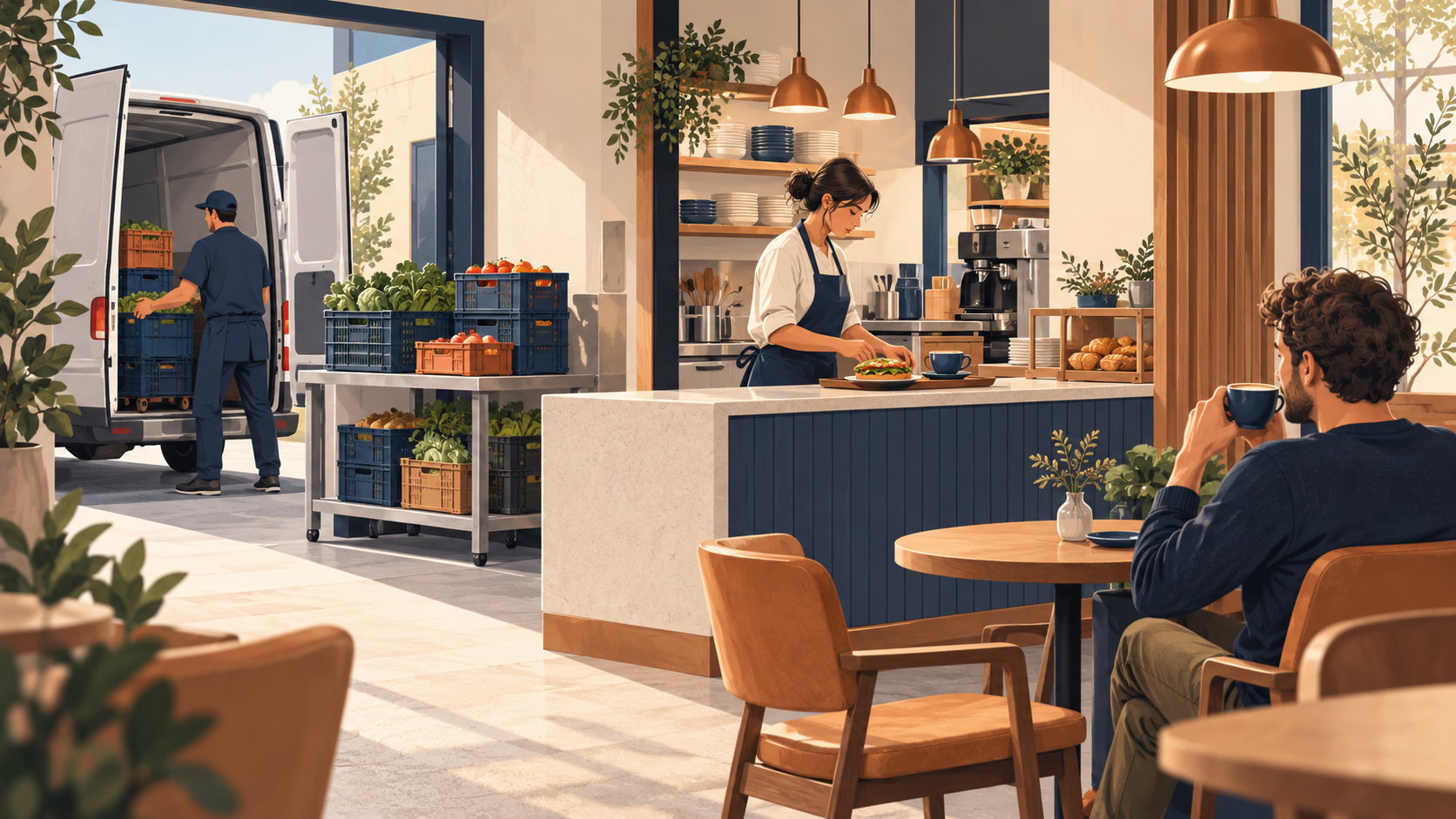
A schematic of a franchised café. Directly operated store sales are recorded separately. Depot, food and vehicle designs are illustrative; no individual delivery frequency is implied.
Source: franchise features (Japanese) · Franchise terms (Japanese)
A franchisee makes more than one kind of payment
Separating purchases of supplies from seat-based royalties makes headquarters’ role easier to see.
- Buy food suppliesA wholesale transaction with headquarters
- Pay royaltiesA monthly amount based on seats
- Serve café customersReceive payment for food and drinks
Menu prices and wholesale prices changed at different times
THE VIEW AFTER THE NUMBERS
What the numbers suggest
A customer buys a meal or drink at the café; upstream, a franchisee buys supplies from Komeda. The ¥39.296bn of wholesale revenue reflects that second relationship. Royalties depend on seats, while wholesale revenue moves with products and prices. Separating them reveals the practical business of supplying and supporting a growing network of cafés.
Primary sources used
Financial Results for the Year Ended February 2026 (Japanese)
KOMEDA Holdings Co., Ltd. · 2026-04-08
Pages used: p.4 / p.4-5 / p.5 / p.13
Open source →Features of Komeda’s Franchise System (Japanese)
KOMEDA Co., Ltd.
Open source →Franchise Recruitment and Terms (Japanese)
KOMEDA Co., Ltd.
Open source →