Rinnai makes water heaters, gas cooking appliances and heating equipment for homes, shops and other customers. Its main U.S. products include tankless water heaters, which heat water when needed and send it to showers and taps.
U.S. business, calendar quarters in 2025. Unit: millions of yen; all figures are approximate. Bars share a zero baseline.
April–June≈¥280m
July–September≈¥1,200m
October–December≈¥1,230m
Source: results presentation p.12. January–March is shown as a dash in the source and is omitted rather than plotted as zero. The approximate ¥2.7bn annual figure is separately stated by the company.
The tariff table includes finished appliances and heat exchangers
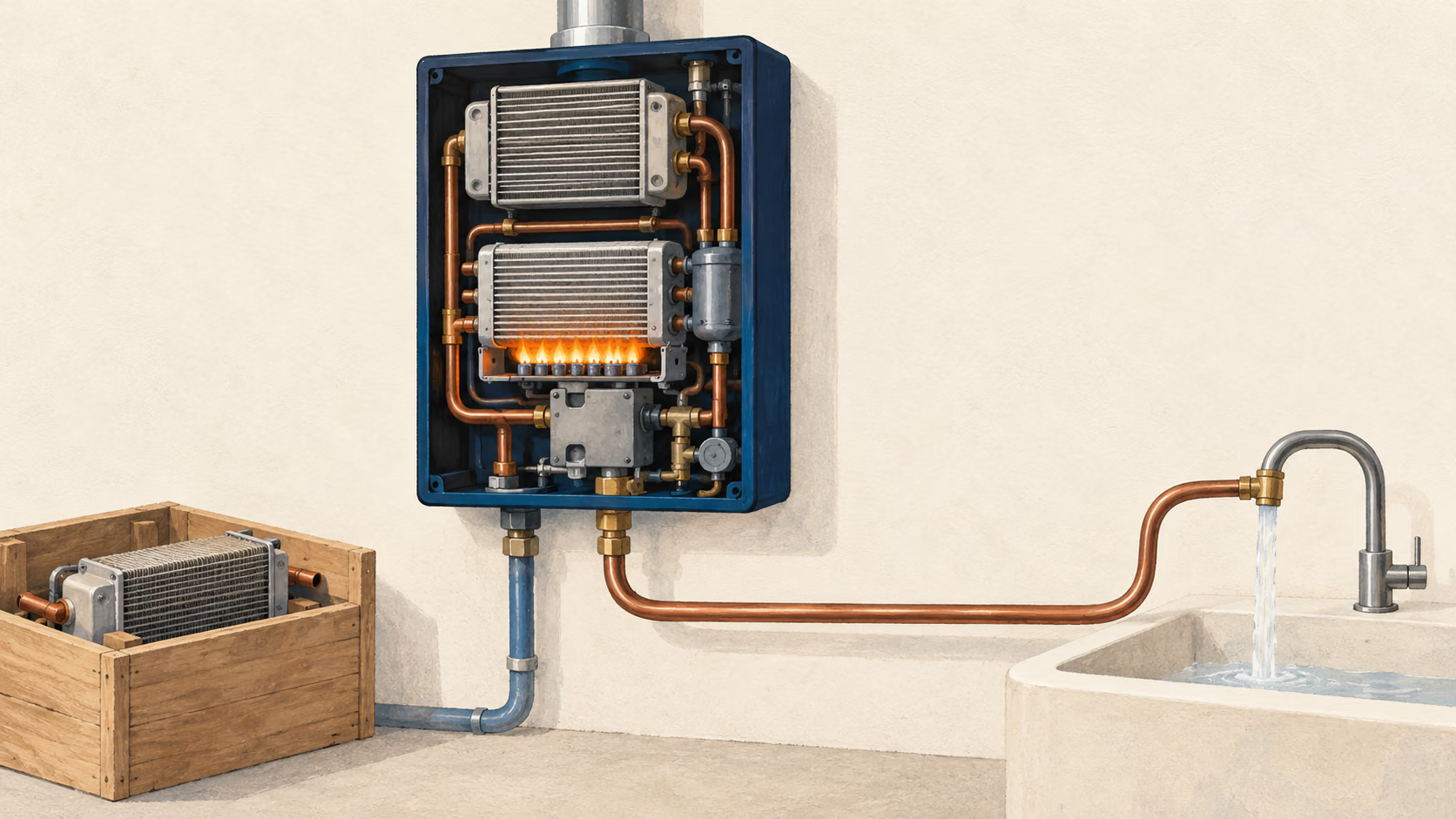
Where water meets heat inside the appliance
Water is preheated in a secondary exchanger, heated further in the primary exchanger, then sent to the tap.
To the point of use
Water pathCombustion heat and exhaust path
Schematic of the two-exchanger explanation on Rinnai America’s website. Positions, dimensions and colors do not specify a product or its materials. The drawing does not show the quantity of metal subject to tariffs.
Japanese-supplied components and U.S. operating costs
CONCEPT MAP
The work behind supplying U.S. water heaters profitably
Product, sourcing and operating relationships in the FY March 2026 materials and integrated report.
U.S. water-heater businessMainly calendar-2025 results
Sell higher-efficiency modelsCondensing units increased within a declining total
Source parts and adjust pricesTariff changes and price increases did not coincide
Review organization and fixed costsSupply, labor costs and operating structure also matter
Tariffs are not the only explanation for earnings changes. Sources: results presentation pp.11–12; integrated report, physical PDF p.15.
Across the group, water-heater sales were ¥281.92bn, or 59.9% of consolidated sales, in the year ended March 2026. Group operating income was ¥50.531bn. The U.S. example examines one region within that much larger water-heating business (results presentation p.7; financial results p.1).
THE VIEW AFTER THE NUMBERS
What the numbers suggest
A water heater’s exchangers transfer heat from combustion into water. Supplying those parts and finished appliances to the United States brought tariffs and the work of adjusting prices as costs changed.
Higher-efficiency models sold more units in 2025, while the U.S. operating margin was 2.6%. The approximately ¥2.7bn payment figure reveals a business shaped by which products it sells, how it sources their components, when it changes prices and what it costs to operate.
Mizuno’s Japan operating-profit increase exceeded the consolidated increase in the year ended March 2026. The company says more direct selling, centered on Sportstyle shoes, lifted Japan’s gross margin. Meanwhile, tariffs raised costs in the Americas and a weak Korean golf market weighed on Asia and Oceania. Regional earnings reflect who buys the products, the route to the customer and the costs the company bears.