Mitsubishi Electric Corporation · Fiscal year ended March 2026
Refrigerators, factory automation, and space: 105 years of electricity inside one company.
Mitsubishi Electric makes products that can look unrelated: refrigerators, air conditioners, elevators, factory-automation systems, railway equipment, semiconductors and satellites. But the breadth was present from the beginning. In 1921, the newly established company was already making transformers, motors and electric fans. FY2025 revenue reached ¥5.895 trillion, and major businesses still span homes, factories, buildings, infrastructure and space. Across 105 years, the recurring theme is not one flagship product but the expansion of technologies for generating, converting, moving and controlling electricity.
This is not investment advice or a stock recommendation. We reorder company-published primary-source facts to make the shape of the business easier to see.
Mitsubishi Electric makes products that can look as if they belong to different companies.
Refrigerators. Air conditioners. Elevators. Factory automation. Railways. Semiconductors. Satellites.
The breadth, however, was present from the beginning.
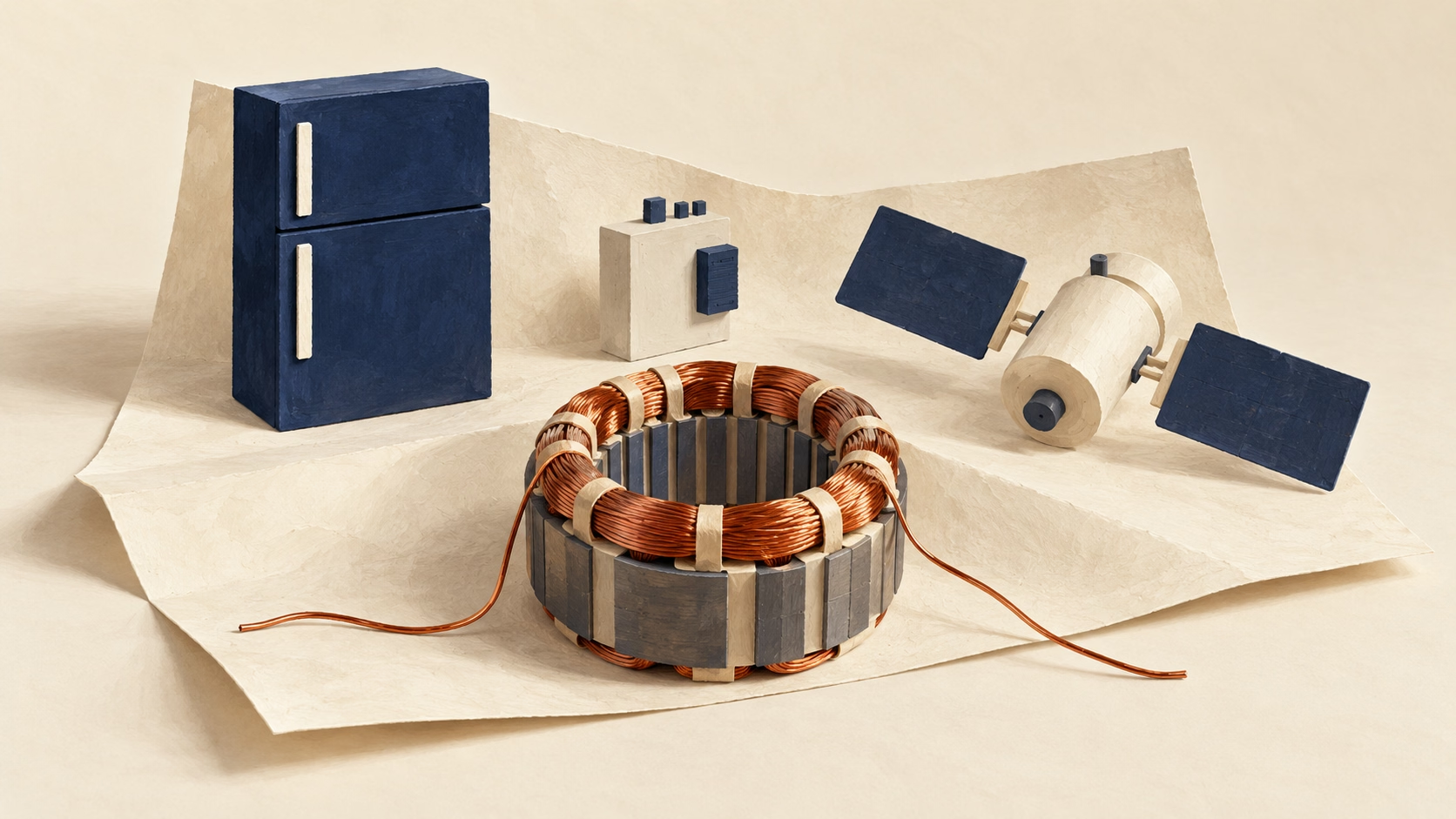
A motor winding and household, factory-control and satellite maquettes interpret the breadth of electrical and control capabilities. Not direct product ancestry, an electrical wiring plan or revenue proportions.
Revenue is ¥5.895 trillion
The largest current business is Life.
Life is ¥2.318 trillion
Factories and mobility form another major block.
Industry & Mobility is ¥1.674 trillion
Infrastructure adds power, transportation, defense and space.
Infrastructure is ¥1.463 trillion
Mitsubishi Electric still spans homes, factories and infrastructure
FY2025 segment revenue. Figures include intersegment sales and are not shares of consolidated revenue.
Geographically, the company is split almost exactly in half.
Half of revenue comes from outside Japan
The broad portfolio did not begin with modern diversification.
It was there in 1921.
The company spun out of a shipyard in 1921
The household branch grew quickly.
Refrigerators arrived in 1933
The same period brought electrical control into buildings.
Elevators and escalators followed in 1935
Control then moved deeper into factories.
MELSEC arrived in 1972
Electrical and control systems also moved beyond Earth.
Mitsubishi Electric became a satellite prime contractor in 1969
By the 1980s, the control logic itself was becoming more sophisticated.
A 32-bit CNC arrived in 1987
A refrigerator and a satellite barely resemble each other as products.
But across the company’s history, the same capabilities repeatedly appear: converting electricity, driving motors, controlling machinery and processing information.
THE VIEW AFTER THE NUMBERS
What the numbers suggest
Mitsubishi Electric generated ¥5.8947 trillion of revenue and ¥433.0 billion of operating profit in FY2025.
Segment revenue was ¥2.3182 trillion for Life, ¥1.6738 trillion for Industry & Mobility and ¥1.4634 trillion for Infrastructure. These figures include intersegment sales, so they are not treated as clean shares of consolidated revenue.
From its establishment in 1921, Mitsubishi Electric was already producing transformers, motors and electric fans. Refrigerators arrived in 1933, elevators in 1935, MELSEC factory controllers in 1972, and satellite programs grew alongside them.
The company did not start from one consumer product and diversify into unrelated fields.
It spent 105 years extending technologies for generating, converting, moving and controlling electricity into homes, factories, buildings, transportation, infrastructure and space.
Primary sources used
Financial Results for FY2025
Mitsubishi Electric Corporation · 2026-04-28
Pages used: p.5 / p.9 / p.10 / p.11 / p.13
Open source →History: 1920s-1970s
Mitsubishi Electric Corporation
Open source →History: 1980s
Mitsubishi Electric Corporation
Open source →History: 2000s
Mitsubishi Electric Corporation
Open source →