Daifuku Co., Ltd. · Year ended December 2025
Daifuku's equipment projects turn progress into revenue
Daifuku builds systems for moving and storing goods in warehouses, factories and airports. It designs, manufactures and installs automated warehouses, conveyors and airport baggage-handling systems, and provides maintenance after they enter use.
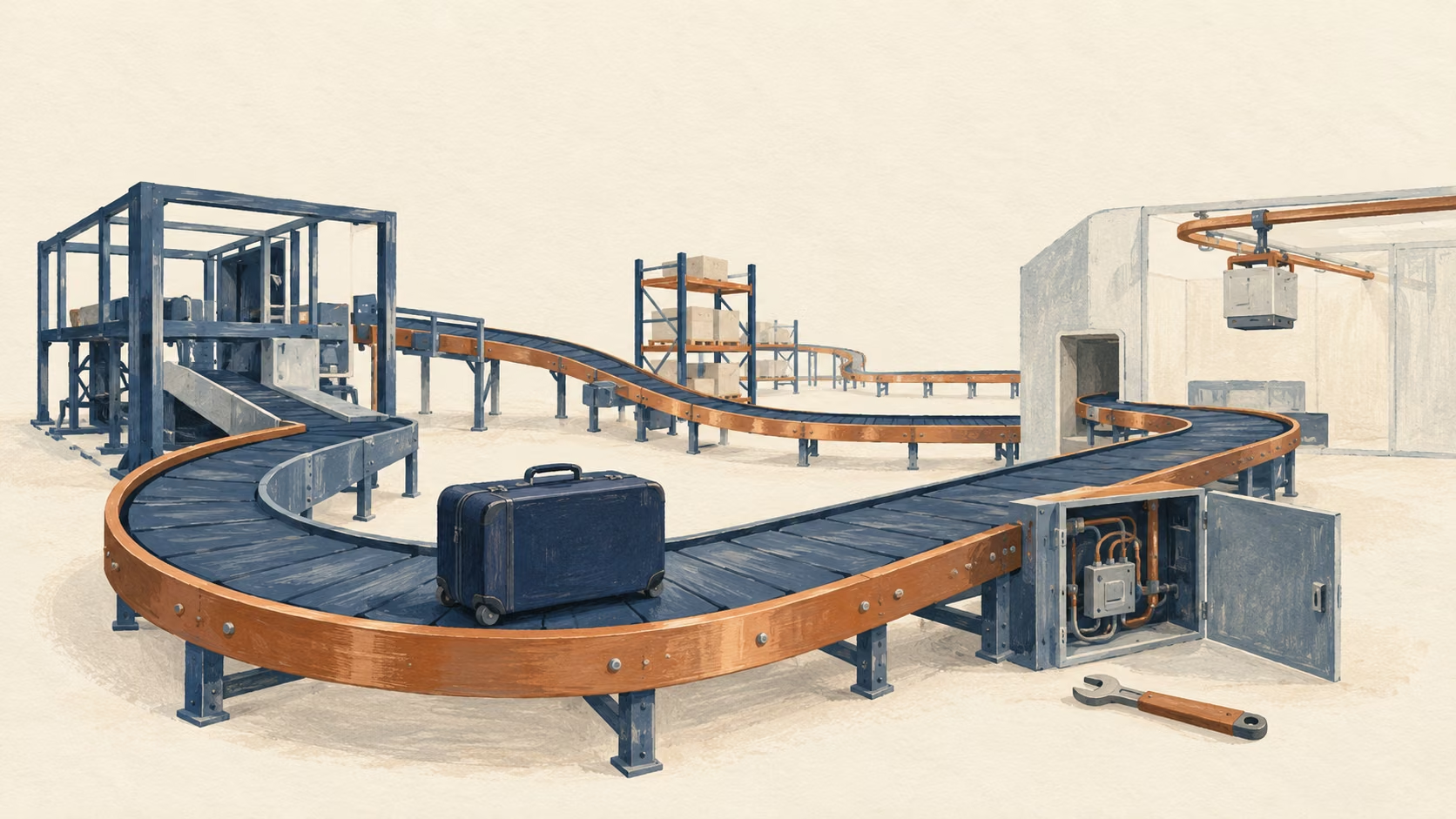
Building equipment to suit the customer’s site
Build for the customer’s site, then support the installed system
A warehouse illustrates the work around a material-handling system.
Customer ordering a system
Specify the goods to handle and the site’s requirements
Daifuku building the system
Design, manufacture and install
Customer site using the system
Store and move goods
Support from DaifukuInspections, parts, modifications
Arrows show the sequence of equipment work, not when revenue is recognized or payment is received.
Sources: Customer-specific construction contracts · Systems and customer settings · Support after installation
Long projects require cost estimates to be revisited
New orders and ongoing projects run on different schedules
More orders can coincide with lower sales
Installed equipment brings maintenance and modification work
THE VIEW AFTER THE NUMBERS
What the numbers suggest
Daifuku builds material-handling systems to suit customers and supports the sites that use them. Construction revenue recognized over time accounted for about 74% of FY2025 consolidated sales. After winning an order, it must keep designing, manufacturing and installing the system while revisiting the costs needed to complete it.
Once the equipment is running, it needs inspections and replacement parts. Changes in the goods or volumes handled can bring modification and renewal work. Building new systems and supporting installed ones both sustain Daifuku’s relationships with customers.
Primary sources used
Annual Securities Report, 110th Term (FY2025)
Daifuku Co., Ltd. · 2026-06-25
Pages used: p.53 / p.55 / p.60 / p.61 / p.135 / p.137
Open source →FY2025 Consolidated Financial Results Presentation
Daifuku Co., Ltd. · 2026-02-12
Pages used: p.15
Open source →Daifuku Report 2026
Daifuku Co., Ltd. · 2026-07-31
Pages used: p.16 / p.51
Open source →