Asahi Kasei Corporation · Fiscal year ended March 2026
A chemical company with homes and dialyzers: how Asahi Kasei branched out.
Asahi Kasei has unusually different faces: household materials, homes, electronic materials and dialyzers. FY2025 net sales reached ¥3.075 trillion and operating income ¥231.2 billion. Today the group is organized into Material, Homes and Healthcare. The path begins with ammonia and rayon in the 1920s, then branches into polymers, housing materials, electronics and medical membranes.
This is not investment advice or a stock recommendation. We reorder company-published primary-source facts to make the shape of the business easier to see.
Asahi Kasei has unusually different faces.
Household materials. Homes. Electronic materials. Dialyzers.
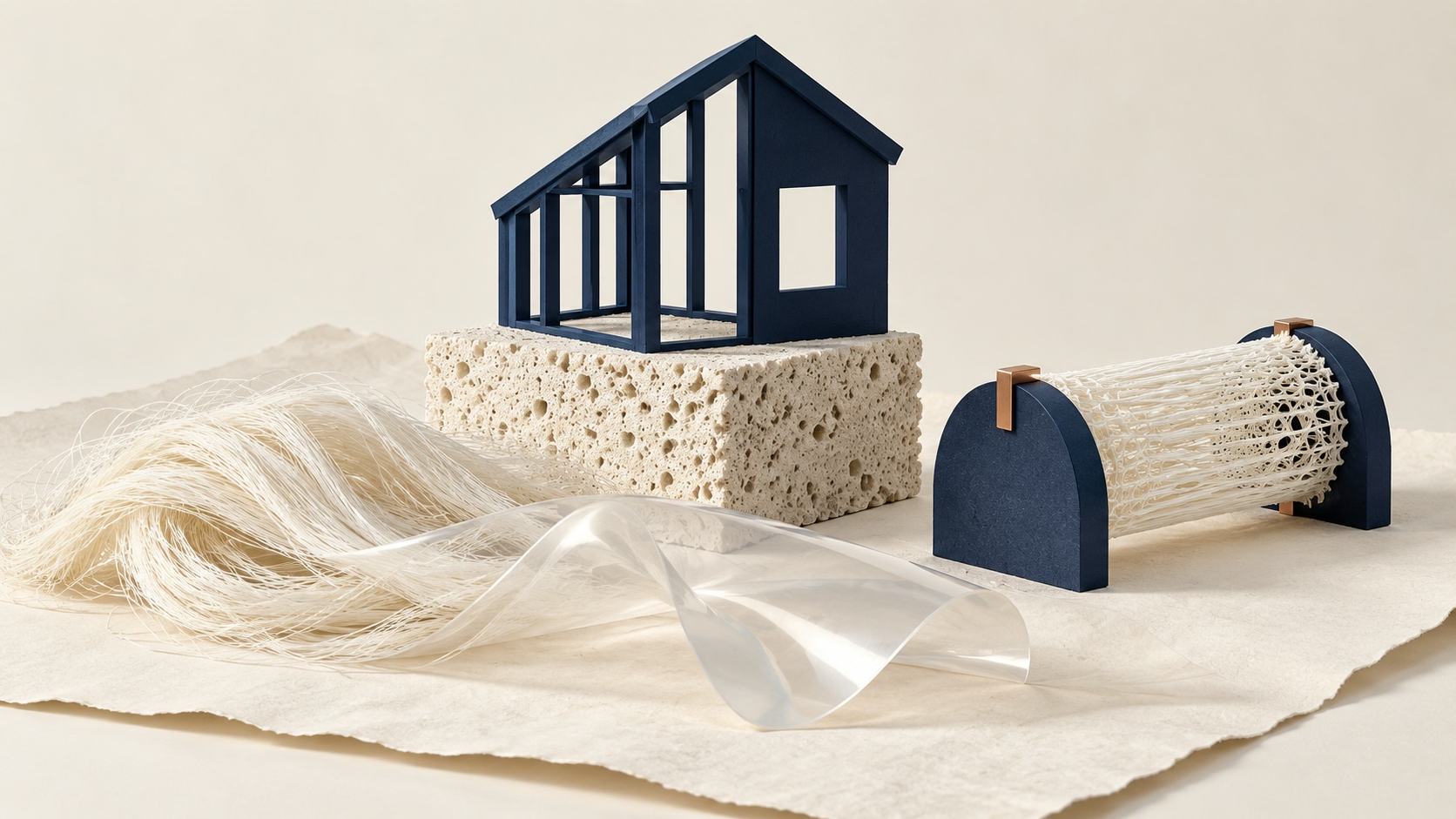
Fiber, film, building material and membrane studies interpret the breadth of Material, Homes and Healthcare. Not a single-material ancestry or a depiction of actual product structures or performance.
Net sales are ¥3.075 trillion
Asahi Kasei's three current sectors
The group's current business structure.
Those three sectors look far apart.
It began in 1922
Ammonia and rayon became the technology base
Saran Wrap arrived in 1960
Building materials followed in 1967
Electronics came in 1971
Artificial kidneys followed in 1974
Fiber technology moved into medical membranes
Shared technologies still sit underneath all three sectors
Asahi Kasei’s diversification therefore looks less like collecting unrelated businesses and more like repeatedly applying a common technology base to different social needs.
THE VIEW AFTER THE NUMBERS
What the numbers suggest
Asahi Kasei generated ¥3.0745 trillion of net sales and ¥231.2 billion of operating income in FY2025.
Its current businesses are grouped into Material, Homes and Healthcare.
The company began with ammonia and rayon in the 1920s, then moved into household materials, building materials, electronics and artificial kidneys.
It still defines shared capabilities around membranes, polymers, electrochemistry, biotechnology, compound semiconductors and chemical-process technologies.
Asahi Kasei therefore did not leave chemistry behind to become a housing or healthcare company.
It kept moving chemistry-based materials and process technologies into different parts of everyday life.
Primary sources used
At a glance
Asahi Kasei Corporation
Open source →History of Asahi Kasei
Asahi Kasei Corporation
Open source →From Fashion to Medical Care: How Asahi Kasei’s Core Technologies and Innovations Drive the Evolution of Business
Asahi Kasei Corporation · 2024-03-13
Open source →Human resources
Asahi Kasei Corporation
Open source →