AMADA CO., LTD. · Year ended March 2026
AMADA passes manual bending instructions to a robot
AMADA sells machines that cut and bend metal sheets to factories making metal parts. Its equipment helps manufacture items such as server racks and air-conditioning housings, supported by software, tooling and maintenance after installation.
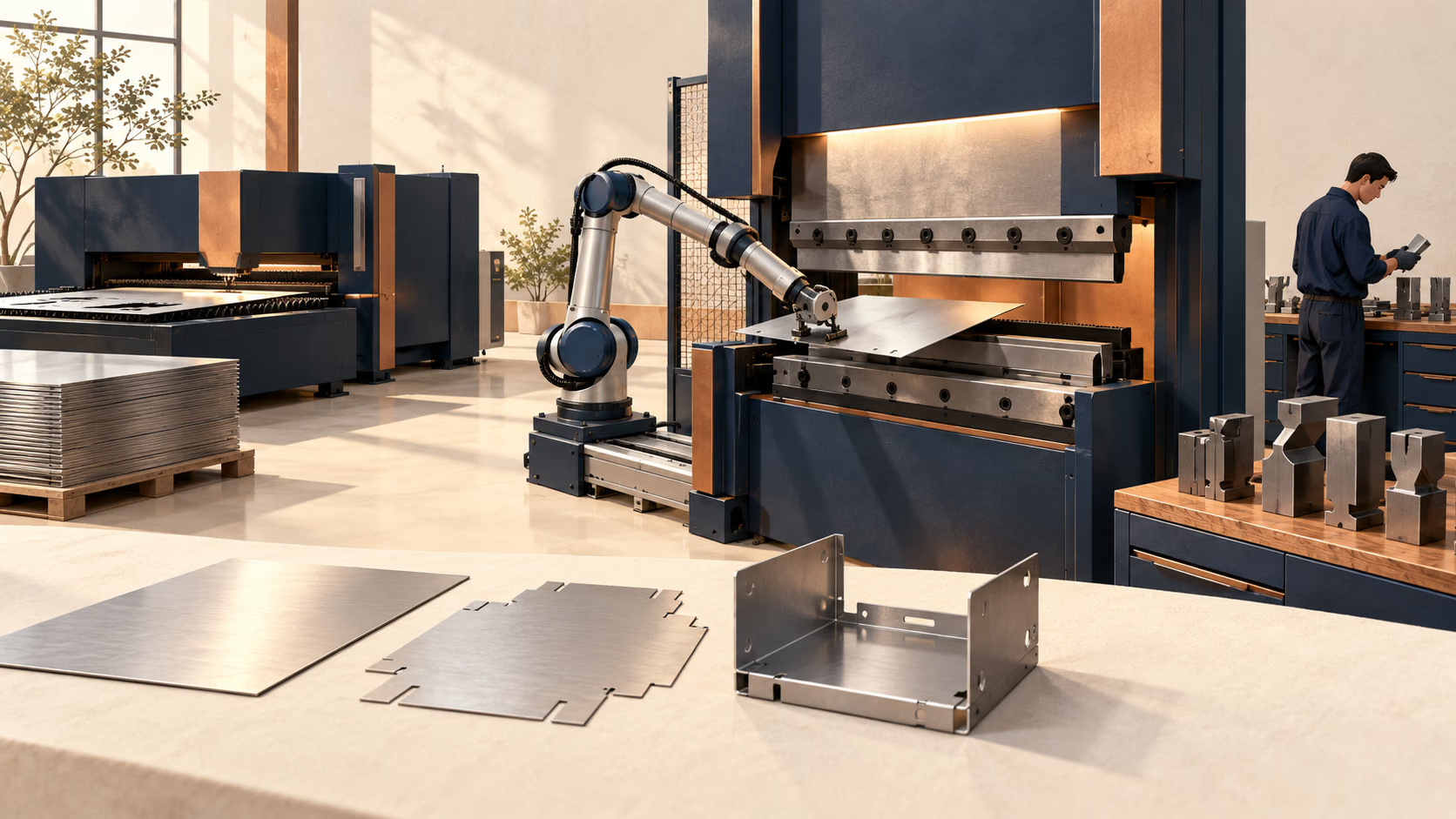
A cut sheet becomes a three-dimensional part
A flat metal sheet becomes a three-dimensional part
Customer factories process metal with AMADA machines and tooling. This schematic shows the basic connection between cutting and bending.
1Cut the flat shape
A laser or another blanking machine cuts the required shape from flat sheet metal.
2Bend between tools
Upper and lower tools apply pressure. The featured machine can switch between manual and robot modes.
3Form a metal part
Bent parts can form product housings. Depending on the product, other processes such as welding may follow.
Equipment and parts are schematic. This is not a specific production line or a claim that every stage runs unattended.
Source: AMADA, Sheet Metal Fabrication Machines (Japanese)
Machine description: MF-TOKYO 2025 release, p.1 (Japanese)
Tooling, consumables and maintenance support factory work
How AMADA works with a customer factory
The customer factory makes the parts. AMADA supports equipment selection, everyday processing and maintenance.
- Choose equipmentDiscuss processing needs and propose machines and automation
- Prepare the workSupply programming software and tooling
- Keep using itSupply consumables, inspections, repairs and operating support
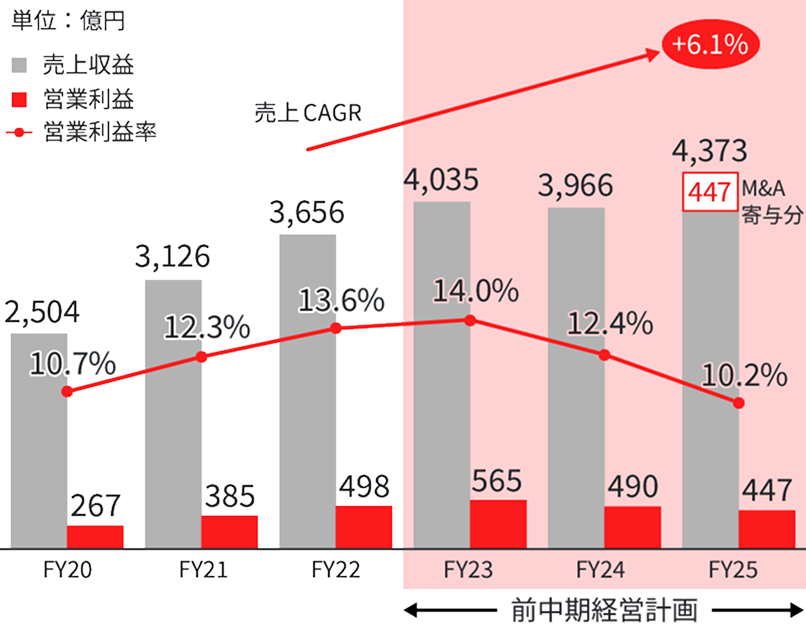
Read the source of growth alongside the falling margin
Consolidated operating margin
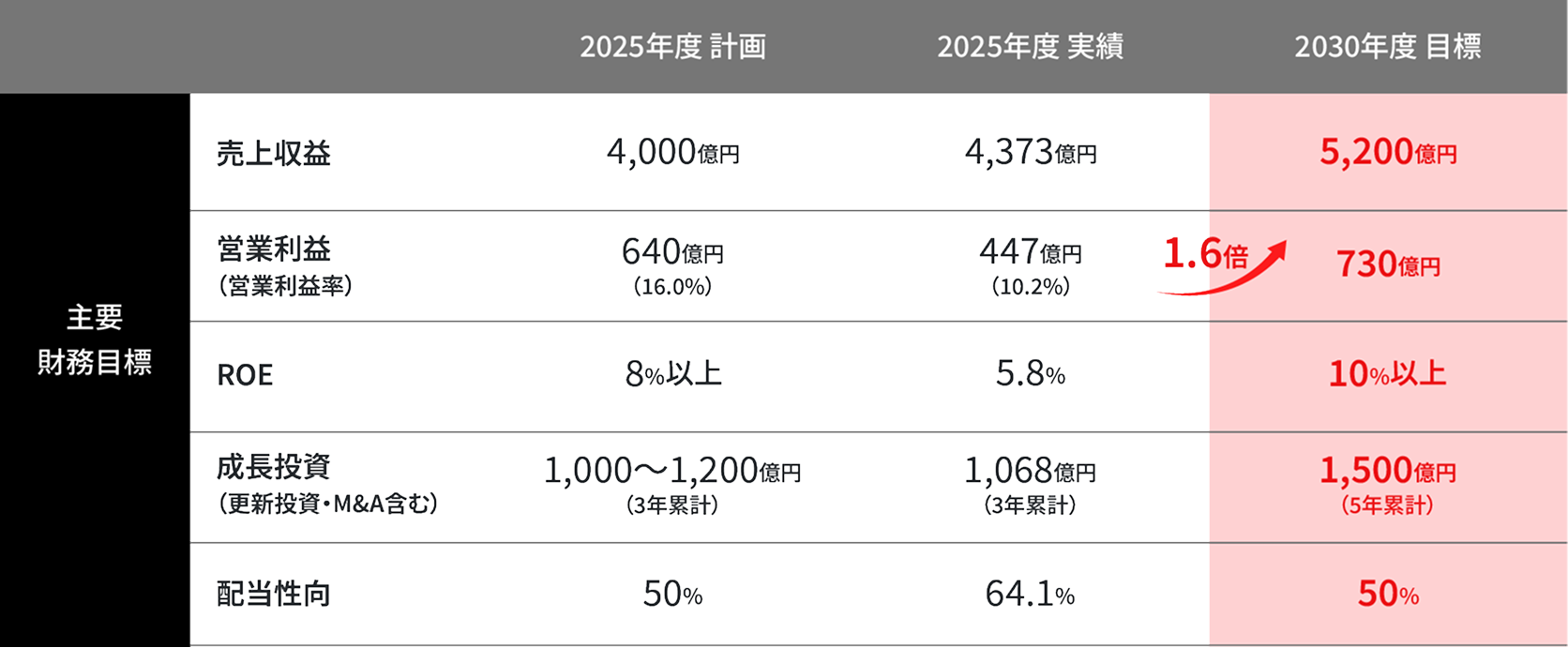
Actuals for years ended March, in %. All three bars share a 0–14.0% scale. The full background represents 14.0%, not 100%. These are group-wide margins, not standalone sheet-metal or service margins.
Sources: AMADA’s official previous-plan review chart and KPI table. The same table also contains FY2030 targets; the figures above are actual results.
THE VIEW AFTER THE NUMBERS
What the numbers suggest
AMADA’s machines cut and bend metal sheets into parts. Material-supply equipment and functions that pass manual-bending information to robots change the work people do around those machines.
Factories can choose manual or robot operation to suit the work and staffing, prepare suitable tools and maintain the equipment. AMADA’s business connects the preparation, processing and upkeep needed to keep making individual parts. Its consolidated results also require attention to acquisitions and changes in profitability.
Primary sources used
Sheet Metal Fabrication Machines (Japanese)
AMADA CO., LTD.
Open source →MF-TOKYO 2025 Exhibition Release (Japanese)
AMADA CO., LTD. · 2025-06-24
Pages used: p.1 / p.1-2
Open source →Medium-term Business Plan 2030: Review and Actual Results (Japanese)
AMADA CO., LTD.
Open source →Sales and Service (Japanese)
AMADA CO., LTD.
Open source →