Nichirei Corporation · Year ended March 2026 (FY2025 in the company's English reporting)
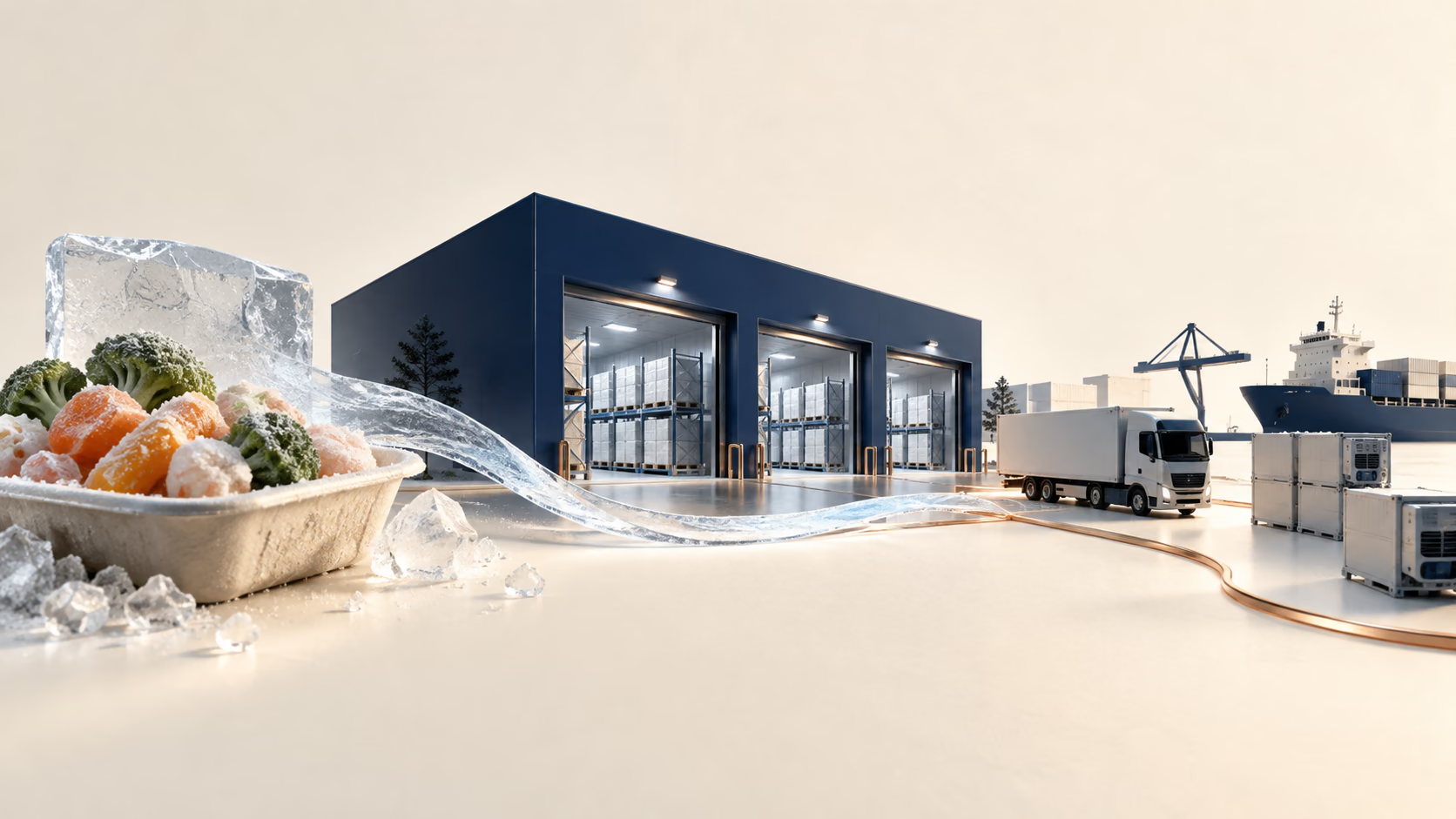
¥301 billion from keeping food cold: Nichirei's other core business.
Nichirei makes frozen foods and also stores, transports and delivers food for other companies. Food manufacturing and temperature-controlled logistics both make substantial contributions to its revenue and profit.
¥716.1 billion in group sales
Food alone generated ¥426.7 billion
Alongside it is a second major business.
Temperature-controlled logistics generated ¥301.0 billion
The two operating-profit figures are almost the same
Food and logistics both contribute substantial profit
Segment figures for the year ended March 2026; not additive to consolidated figures without eliminations and adjustments.
Processed foods contributed ¥334.2 billion
The logistics network also serves customers overseas.
Overseas logistics sales reached ¥92.6 billion
A ¥2.8 billion profit rise requires a qualification
The infrastructure behind those services is extensive.
Cold-store capacity: 2.59 million tonnes worldwide
There is more to logistics than storage space.
Providing an outside customer’s entire cold chain
Food manufacturing and third-party logistics share a history in preserving food at low temperatures.
The cooling business began alongside fisheries operations
Private Nippon Reizo emerged in 1945
One cold-preservation origin; two distinct commercial engines
An editorial view from ice-making and cold storage in the 1940s toward finished foods and logistics services.
- Make processed foodsRetail and foodservice frozen foods
- Store food for customersRefrigerated warehouses and distribution hubs
- Move it under temperature controlDelivery, sorting and third-party logistics
- Extend logistics abroadEurope and other regional networks
The transport network has roots decades before modern frozen-food distribution.
Refrigerated trucking in 1959; expansion into Europe in 1988
THE VIEW AFTER THE NUMBERS
What the numbers suggest
In the year ended March 2026, Nichirei reported ¥716.1bn in consolidated sales and ¥39.0bn in operating profit.
Food delivered ¥426.7bn in sales and ¥19.9bn in segment operating profit; alongside it, temperature-controlled logistics contributed ¥301.0bn and ¥18.6bn. Overseas logistics sales alone amounted to ¥92.6bn. The company’s separate 2025 guide lists 2.59 million tonnes of global cold-store capacity.
Depreciation-method changes influenced the logistics profit increase, so underlying growth should not be overstated. From the group’s original ice-making and storage businesses, two sizable and distinct operations have emerged: producing food and keeping other companies’ food moving through a cold chain.
Nichirei is both a maker of frozen foods and a provider of infrastructure for the wider food system.Primary sources used
Full-year Results Presentation (year ended March 2026; company FY2025)
Nichirei Corporation · 2026-05-12
Pages used: p.5 / p.6 / p.35 / p.36
Open source →History
Nichirei Corporation
Open source →Nichirei at a Glance (Japanese original)
Nichirei Corporation
Open source →Nichirei Logistics Group — temperature-controlled logistics
Nichirei Corporation
Open source →