Bridgestone Corporation · Fiscal year ended December 2025
One tire, more than one life: Bridgestone at ¥4.43 trillion.
A tire seems like a product that is sold once and replaced when worn. Bridgestone has been extending that boundary. FY2025 revenue was ¥4.429 trillion and new tires remain the core. Yet the 2007 acquisition of Bandag strengthened retreading, while maintenance, pressure monitoring and tire-data tools now connect the usage phase as well. The unit of business is stretching from one new tire toward the tire's full life.
This is not investment advice or a stock recommendation. We reorder company-published primary-source facts to make the shape of the business easier to see.
A tire seems to end when its tread wears out.
Bridgestone has been extending that endpoint.
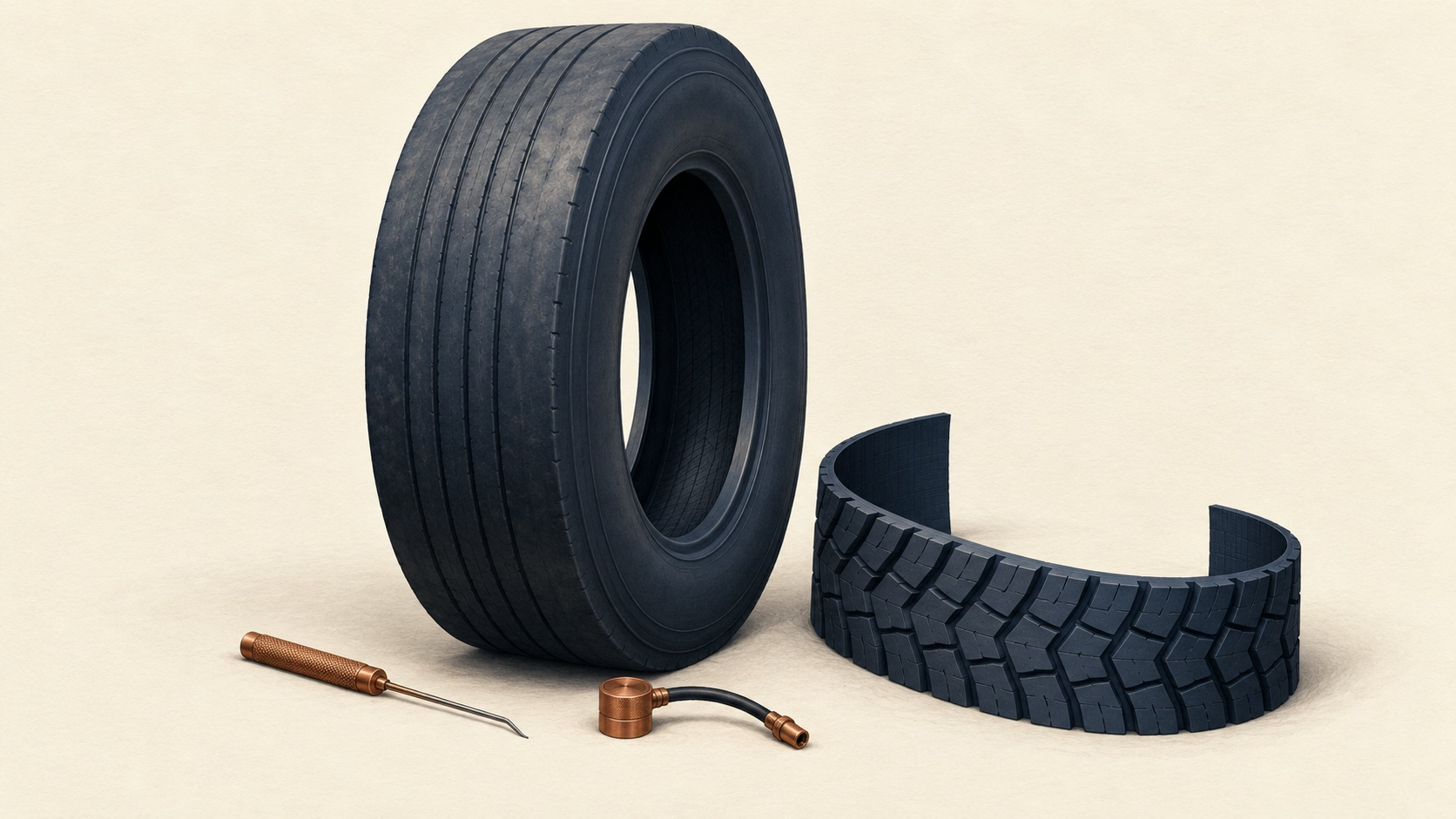
A casing, replacement tread and inspection tools interpret work that extends through use and renewal. Not a claim that every tire can be reused or evidence of specific safety or cost outcomes.
Revenue is ¥4.429 trillion
The largest product group is passenger-car and light-truck tires.
PS/LT is ¥2.501 trillion
Truck and bus tires are where the business model becomes more interesting.
Truck & Bus is ¥1.018 trillion
Specialties is ¥623.4 billion
Diversified products is ¥287.1 billion
Tires still dominate Bridgestone
FY2025 revenue by product group.
The tire business began with a single product in 1930.
The first tire was made in 1930
A major shift in the lifecycle business came in 2007.
Bridgestone acquired Bandag in 2007
Retreading does not discard the whole tire.
Retreading gives the casing another life
The next layer is data from tires while they are being used.
Pressure and temperature become remote data
Retread production and installed tires become data
Make a tire.
Use it.
Watch its condition.
Retread a usable casing.
Use it again.
The tire business stretches beyond the moment of sale.
THE VIEW AFTER THE NUMBERS
What the numbers suggest
Bridgestone generated ¥4.429 trillion of revenue and ¥493.7 billion of adjusted operating profit in FY2025.
Tires remain the center. PS/LT generated ¥2.501 trillion, while Truck & Bus—including retread—generated ¥1.018 trillion.
Bridgestone made its first tire in 1930 and was established in 1931. In 2007 it acquired Bandag and strengthened a model that combines new and retread tires.
Today Tirematics remotely monitors pressure and temperature, Toolbox manages fitted-tire and inspection records, and BASys manages retread production, inspection and inventory data.
Bridgestone is not moving away from tires.
It is extending the same tire business from “make and sell” into “use, monitor, renew and use again.”
Primary sources used
Consolidated Financial Results for FY2025
Bridgestone Corporation · 2026-02-16
Pages used: p.1
Open source →Financial Results for Fiscal 2025
Bridgestone Corporation · 2026-02-16
Pages used: p.20
Open source →History
Bridgestone Corporation
Open source →2001–2007: A global company of excellence
Bridgestone Corporation
Open source →Digital tools for fleet business
Bridgestone Corporation
Open source →